
Why 2026 Is the Year to Find Your Perfect Cheap Eco Haven
The best 2026 cheap eco havens are places where low cost and low impact come together naturally — not as a marketing gimmick, but as a way of life.
Here’s a quick look at the top options for 2026, by category:
| Category | Top Picks | Starting Cost |
|---|---|---|
| Eco-villages (buy) | Belize, Costa Rica, Australia | From ~$99,000 |
| Prefab/tiny homes | DIY kits, prefab builds | From ~$10,000 |
| Budget travel stays | Albania, Vietnam, Sri Lanka, Bolivia | From ~$8–15/night |
| Eco-retreats | Costa Rica, Tonga | From ~$20/night |
| Backpacker daily budget | Most destinations listed | ~$25–50/day |
Popular spots like Bali and Tulum are getting crowded and expensive. Meanwhile, places like Albania’s Adriatic coast, Bacalar in Mexico, and emerging eco-villages in Oceania and Central America are quietly offering something far more compelling: genuine sustainability at prices that don’t hurt.
Whether you want to book a stay, buy a prefab tiny home, or invest in an eco-village plot, the options in 2026 are wider — and cheaper — than most people realize.
This guide covers all of it: where to go, what it costs, and how to make it happen.
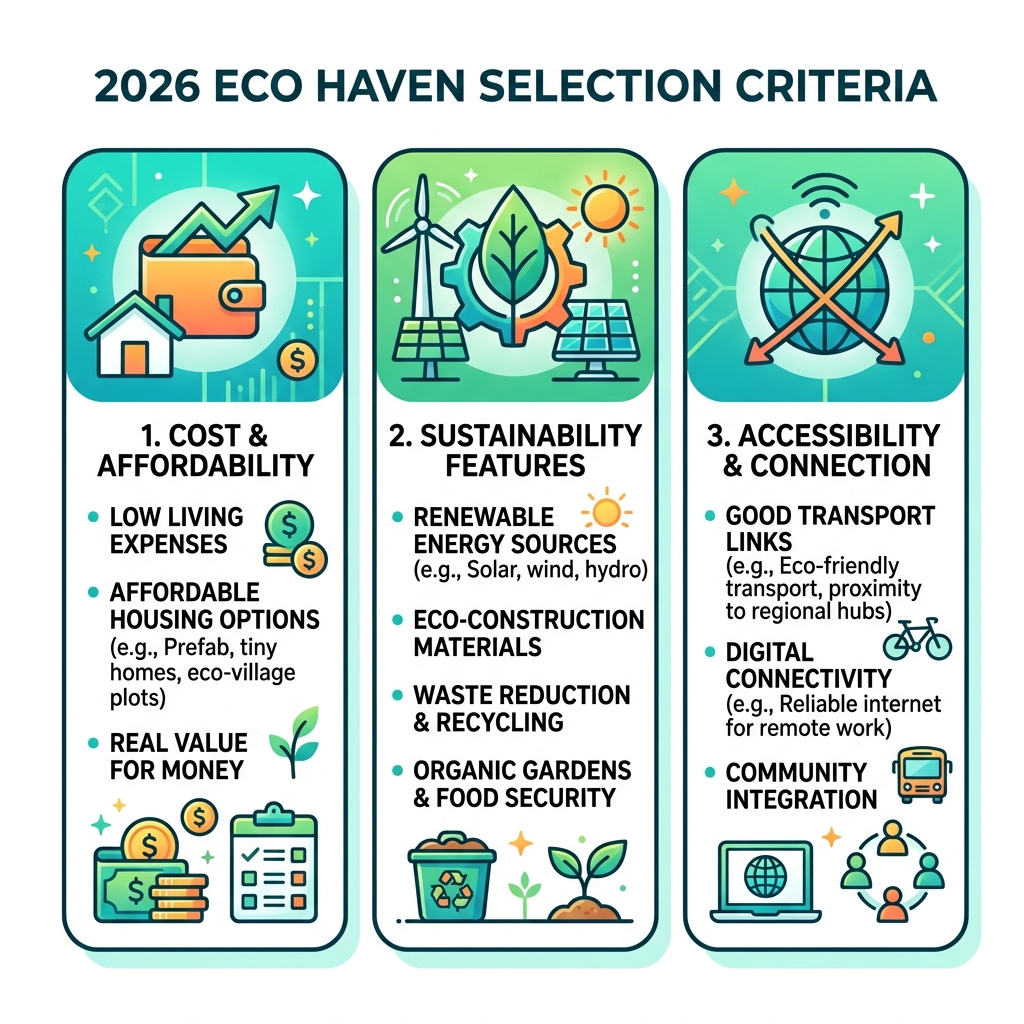
Top Global Eco-Villages and Communities for 2026

Finding a community that aligns with your values and your wallet is the “holy grail” of sustainable living. In 2026, we are seeing a surge in intentional communities that have moved past the planning phase and are actively building homes for purchase. These aren’t just housing developments; they are regenerative ecosystems designed for people and the planet to thrive together.
Costa Rica remains a titan in this space. La Ecovilla Original is a prime example of what is possible. Established in 2012, it has transformed 42 acres of formerly deforested cattle land into a lush food forest. Today, it hosts 48 international families who enjoy shared amenities like a saltwater pool, yoga shala, and direct access to the Machuca River.
For those seeking a mountain sanctuary, Zen Village Costa Rica in the Chirripó mountains offers a unique “conscious economics” model. You can find lodging from as low as $20 a night if you bring your own tent, or stay in a Zen Casa for $180. They even offer a work-exchange program where you can earn your stay by helping with permaculture or yoga teaching.
If you prefer the coast, Beija Flor Village near Santa Teresa provides a nature-based community perfect for families. It features a forest school for children and a “village mindset” that encourages spontaneous jam sessions and communal potlucks.
Emerging 2026 Cheap Eco Havens in Oceania and Asia
While Central America is a hotspot, Oceania and Asia are stepping up with their own 2026 cheap eco havens. In Australia, Afterlee Ecovillage is actively building and selling eco-homes. This project is a fantastic example of community-led expansion, focusing on affordable entry points for those looking to exit the traditional housing market.
In Asia, Sri Lanka is emerging as a top-tier destination for low-cost travel destinations for students in 2026. Beyond just travel, the country is seeing a rise in homestays and community-driven builds that prioritize local materials and traditional cooling techniques. The cost of living here is incredibly low; a massive local food buffet might only set you back $5 to $8, making it an ideal spot for those testing the waters of long-term eco-living.
Luxury vs. Budget Value in Sustainable Communities
You don’t always have to choose between luxury and sustainability. At Serenity Eco Retreat in Tonga, you can experience an ultra-remote, self-sustaining island life. During the 2026 whale season, you can stay in traditional wooden fales and participate in whale-watching tours for around $220 USD. It’s a “luxury” experience in terms of exclusivity and nature access, but with a footprint that respects the uninhabited island it calls home.
On the other hand, PachaMama in Guanacaste, Costa Rica, offers a more immersive, budget-friendly retreat vibe. They have transformed 500 acres of grassland into a reforested paradise. Their “Jungle Shop” minimizes waste by using refillable glass containers and biodegradable soaps, proving that high-standard eco-living can be achieved through simple, intentional choices. For more ideas on how to balance cost and paradise, check out our guide on budget-friendly tropical vacations for 2026.
Affordable Eco-Homes: Buying Your Slice of Paradise
If you’re looking to put down roots, Belize is currently one of the most attractive markets for affordable eco-homes. The Cayo District and Ambergris Caye offer diverse options. For instance, a 657 sq ft jungle-view home in Cayo was recently priced at just $99,000. If you want something closer to the water, homes in the Secret Beach area of Ambergris Caye range around $229,000 for a 2-bedroom setup.
When buying in these areas, it’s important to understand the local legal landscape. In Costa Rica and Belize, foreigners generally enjoy the same property rights as citizens. At LEV – Eco Village, the focus is on regenerative design that goes beyond sustainability. They provide a high-quality on-site well for safe drinking water and use biodigesters for waste, ensuring that your home actually improves the land it sits on.
Prefab Tiny Homes and Eco-Kits for 2026 Cheap Eco Havens
For many, the path to a 2026 cheap eco haven involves a prefab or tiny home. These structures offer mobility and a significantly reduced environmental footprint.
| Home Type | Estimated Cost Range | Best For |
|---|---|---|
| DIY Cabin Kits | $5,000 – $20,000 | Hands-on builders on a strict budget |
| Stationary Prefab | $35,000 – $68,000 | Permanent placement on owned land |
| Mobile Tiny Homes | $60,000 – $80,000 | Digital nomads and flexible living |
| Luxury Tiny Homes | $150,000 – $235,000 | High-end finishes and maximum comfort |
Companies like Jamaica Cottage Shop offer affordable cabin kits starting as low as $5,000, while Tiny Cocoons specializes in sustainable builds ranging from $51,500 to over $200,000. These are excellent options for cheap backpacking destinations for 2026 where land is cheap but construction infrastructure is limited. By shipping a kit, you control the quality and the environmental impact of the materials used. To find more locations where these homes might fit, discover hidden budget travel gems for 2026.
Financing and Setting Up Your Sustainable Home
Financing an eco-home in a foreign “haven” can be tricky but not impossible. Many eco-villages, like Beija Flor, offer their own financing terms for lot purchases. When setting up, you’ll need to account for “big-ticket” sustainability items:
- Solar Arrays: Essential for off-grid living. Pro tip: use gas for stoves and dryers to keep your electric load manageable.
- Water Systems: If well-digging isn’t permitted, you’ll need a catchment system with cisterns and tanks.
- Waste Management: Look for communities that use grey-water recycling for landscaping.
Shipping and installation details vary by region, but many prefab companies provide comprehensive guides or even on-site assembly teams. For more logistical help, see our low-budget travel guides for 2026 and affordable vacation spots worldwide for 2026.
The Best Underrated Destinations for Eco-Travelers
Sometimes the best way to find a permanent haven is to spend time as a traveler first. In 2026, several underrated destinations stand out for their mix of affordability and natural beauty.
- Albania: Often called the “new Croatia,” Albania offers Mediterranean beauty at a fraction of the cost. Hostels in the Riviera cost $10–$15, and a local meal is around $5. It’s one of the best cheap countries to visit in 2026.
- Vietnam: A perennial favorite for digital nomads. In places like Da Nang, you can find apartments for $500/month. The street food is not only delicious and cheap ($1–$3) but often more sustainable than eating at large resorts.
- Bolivia: In 2026, Bolivia is scrapping its $160 visa fee for Americans, making its stunning landscapes—from the Salt Flats to the Amazon—much more accessible. It’s a true hidden budget travel gem for 2026.
- Bacalar, Mexico: Known as the “Lagoon of Seven Colors,” Bacalar is the eco-conscious alternative to the over-commercialized Tulum.
Daily Living Costs in 2026 Cheap Eco Havens
Living in these havens is surprisingly affordable if you follow the “resident-first” rule: eat where the locals eat and use the transport they use.
| Destination | Hostel/Homestay | Local Meal | Activity Example |
|---|---|---|---|
| Sri Lanka | $8 – $15 | $5 – $8 | $75 Safari for two |
| Albania | $10 – $15 | $5 – $15 | Free hiking in Vjosa Park |
| Vietnam | $7 – $12 | $2 – $5 | $10 Bike rental/day |
| Mexico (Bacalar) | $15 – $30 | $5 – $15 | $20 Kayak rental |
For couples looking to stretch their budget, these spots are perfect budget travel spots for couples in 2026. You can also find more sea-side savings in our list of affordable beach destinations for the year 2026.
Practical Guide to Off-Grid Living and Sustainable Features
Living off-grid in one of these 2026 cheap eco havens requires a shift in mindset. It’s not about sacrifice; it’s about efficiency.
- Passive Cooling: Use high ceilings, insulation, and cross-breezes. In tropical havens, a well-designed roof can reduce the need for AC by 70%.
- Water Wisdom: Rainwater collection is a staple. In PachaMama, they use swales and retention lagoons to conserve water and recharge the local aquifer.
- Compost Toilets: While they take some getting used to, they significantly reduce water usage and return nutrients to the soil.
- Grey-Water Recycling: Many communities in Costa Rica use grey-water from sinks and showers to irrigate their food forests.
By adopting these features, you not only help the planet but also eliminate monthly utility bills, making your “cheap haven” even cheaper in the long run. If you’re looking for similar sustainable vibes closer to home, explore inexpensive travel destinations in Europe for 2026.
Safety, Visas, and Logistics for Eco-Living
Before you pack your bags for a 2026 cheap eco haven, consider the practicalities:
- Visas: Costa Rica offers residency for those who invest $150,000 or more in real estate. Georgia (the country) offers a one-year visa for remote workers, which is excellent for testing the eco-lifestyle.
- Healthcare: In Costa Rica, the public “Caja” system is available to residents, but many expats opt for private insurance for faster service.
- Access: Be prepared for the “adventure tax.” Many of the best eco-villages, like Zen Village, require a 4WD vehicle to navigate unpaved mountain roads, especially during the rainy season (May–November).
- Safety: El Salvador has seen a massive drop in crime rates recently, making it a new contender for budget eco-travelers. However, always check current travel advisories.
For more family-specific advice, check out our top budget destinations for families in 2026 or find your next getaway in our budget-friendly tropical vacations in 2026.
Frequently Asked Questions about 2026 Cheap Eco Havens
What are the most affordable countries for buying eco-homes in 2026?
Belize and Vietnam currently offer some of the best value. In Belize, you can find jungle-view plots and homes starting under $100,000. Vietnam is incredibly affordable for long-term rentals and is seeing a rise in sustainable “digital nomad” hubs.
How much does it cost to live in an eco-village as a digital nomad?
On a backpacker budget, you can live in many of these havens for $800–$1,200 per month. This covers a modest room or small cabin, local food, and basic transportation. If you are buying a home, your “utility” costs could drop to near zero if you are fully off-grid with solar and water catchment.
Are there specific visa requirements for long-term eco-living in Costa Rica or Belize?
Yes. While you can buy property on a tourist visa in both countries, staying long-term requires residency. Costa Rica’s “Investor” category is popular for property buyers. Belize offers a “Qualified Retired Person” program that is very attractive for those over 45, offering tax exemptions on out-of-country income.
Conclusion
At Larcomestilo, we believe that the future of travel and living isn’t found in the most famous resorts, but in the places that value harmony over hype. By focusing on 2026 cheap eco havens, we help you find spots that are kind to both the earth and your savings account.
Whether it’s the regenerative rivers of Costa Rica, the wild coastlines of Albania, or a tiny home you built yourself, these havens offer a path to a more intentional life. With meticulous planning and a sense of adventure, your sustainable future is closer than you think.
Discover more hidden budget travel gems for 2026 and start planning your escape today!
